Cold Starting a Marketplace: Summimarket
Overview
Summimarket is a curated auction marketplace for Leica cameras and lenses. As co-founder and marketing lead, I owned the go-to-market while my partner ran operations and product.
The hard part of any marketplace is the start. You can’t attract sellers without buyers, and you can’t attract buyers without things to sell. On top of the empty-room problem, Leica gear already had well-worn places to change hands: eBay, MPB, KEH, collector forums like Fred Miranda, and established dealers. These weren’t just competitors with more inventory; they were where the community already trusted, transacted, and hung out. We were asking people to do something they already knew how to do somewhere else.
Objective
Build both sides of the marketplace from zero and give Leica owners a reason to sell with us instead of the places they already used. Establish enough trust, liquidity, and momentum to prove the model could work.
My Role & Responsibilities
I led every part of taking Summimarket to market and building its brand.
Strategy & GTM Design the cold-start sequence — which side to build first, and how to convert attention into supply and demand.
Supply Recruit the first sellers and the inventory that made early auctions credible.
Demand Grow an audience of qualified Leica buyers and keep them engaged between auctions.
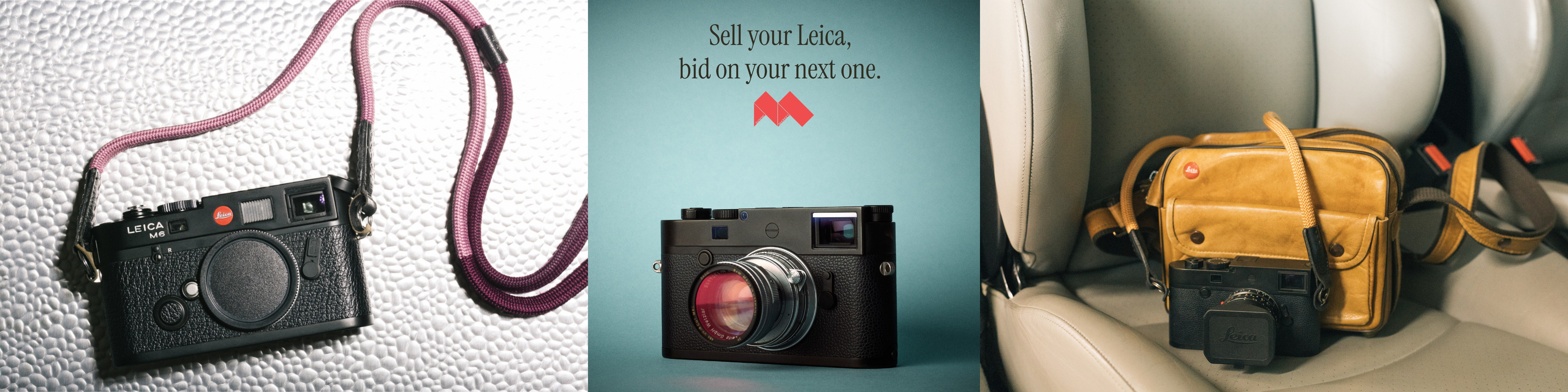
Brand & Creative Define the brand identity and produce the creative — ad campaigns, product and editorial photography, and communication assets — that made a new marketplace look like one worth trusting.
Content Write and run the blog and market digest that became a lead-generation engine.
Process
- Pick the side to build first, and the wedge to build it with. I started on the supply side. Sellers were the harder, more valuable side to win, and a marketplace with no inventory has nothing to show buyers. But cold-pitching strangers to list a $4,000 camera on a platform nobody had heard of doesn’t work. I needed a reason for sellers to come to us first — something useful enough that listing felt like the natural next step rather than the opening ask.
- Turn market data into the lead-generation engine. That reason became data. The Leica market is opaque: prices swing, comparable sales are scattered across platforms, and most owners have no reliable sense of what their gear is worth. I built content around that gap — a recurring market digest tracking real sold prices and trends across models. The content earned the right to ask for the listing. Someone who just learned their M6 had appreciated 12% was a far warmer lead than a stranger, and every digest closed with an offer of free listings. I paired the inbound content with direct outreach to known collectors and sellers I’d identified through the communities.
- Give sellers reasons to choose us over eBay, forums, and dealers. Data brought people in; the model had to keep them. I positioned Summimarket against the specific weaknesses of the incumbents. Forums and eBay are low-trust and opaque — you’re often guessing about condition, authenticity, and fair price. So our offer was the opposite: curation and authentication so buyers knew exactly what they were getting, an auction format that created real price discovery and urgency, transparent pricing backed by our own market data, and a white-glove experience for both sides of the transaction. Curation justified the premium and made the marketplace feel like a destination rather than a listings dump.
- Build and engage the demand side. The same content that recruited sellers also built the buyer audience. The market digest gave Leica enthusiasts a reason to subscribe and keep opening emails whether or not they were ready to buy, which kept demand warm between auctions — important when you’re running discrete auction events rather than always-on listings. I sourced first buyers and sellers from the places the community already lived: the forums, Instagram and other visual social channels, SEO and search traffic from people researching Leica values, and word of mouth through my own network.
- Build the brand and create the assets. A new marketplace asking people to trust it with expensive gear has to look the part. I owned the brand identity and produced the creative myself — running ad campaigns, shooting high-quality product and editorial photography for our communications, and writing and running the blog. For a luxury collector audience that judges quality on sight, the photography in particular did real work: it signaled that we understood the gear and treated it with the care our sellers expected.
Result
Marketing efforts began in March 2025. From a standing start, with no prior audience and no inventory:
- Nearly 700 users on the platform.
- 29 auctions run to date, building a track record of completed, trusted transactions.
- Email open rates above 75% — far beyond industry norms — showing the market digest built genuine engagement rather than a list of unengaged subscribers.
- Repeat sellers and repeat buyers, the clearest signal that the trust and experience we built actually held. In a market where the easy default was to go back to eBay or a forum, people came back to us.
- Revenue generated in the first year, validating that the model could convert all of the above into a real business.
Platform + Technology Used
- Ghost: market digest distribution and audience engagement
- Adobe Creative Suite: ad creative and brand assets
- Photography: product and editorial shoots for marketing and listings
- Data analysis: sold-price tracking and market digest reporting
- Social & SEO: audience acquisition across forums, Reddit, Instagram, and search
Lessons Learned
- Useful beats promotional when supply is the hard side. Leading with market data instead of a sales pitch gave sellers a reason to come to us first. The content earned the relationship; the listing followed.
- Trust is the product in a high-value niche. Against entrenched, trusted incumbents, curation, authentication, and transparent pricing were the whole pitch. Repeat sellers and buyers were the proof it landed.
- Brand and craft carry real weight with collectors. For an audience that judges quality on sight, the photography and brand identity weren’t decoration — they were credibility.
- Bootstrapping demands resilience and capital. Building a business from nothing is slow, expensive, and uneven. Sustaining momentum through that takes as much endurance as it does strategy.